

Ultracompact dual frequency echosounder for surface vehicles
We offer open-source APIs for our devices, empowering developers by simplifying integration, accelerating development, improving functionality, and enhancing compatibility. This strategic move not only boosts developer satisfaction and productivity but also strengthens our market position and drives innovation.
Echologger APIs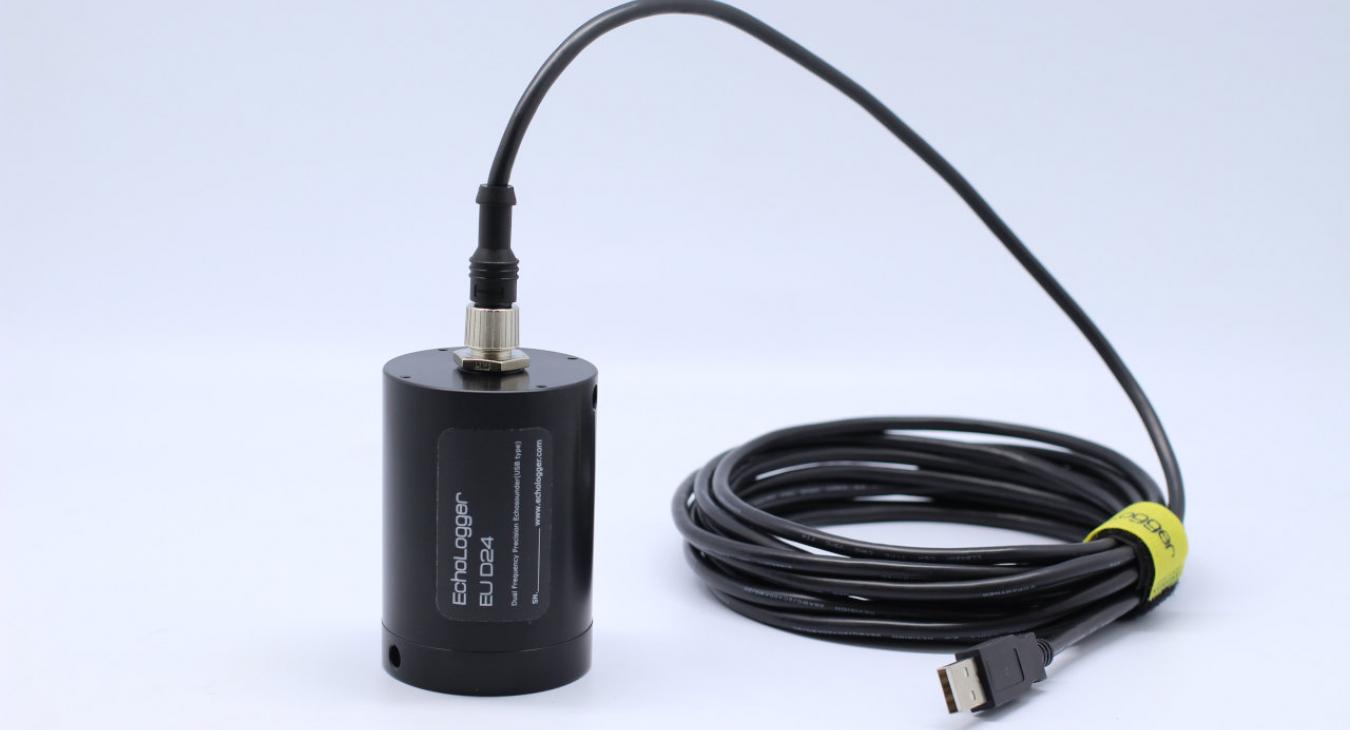
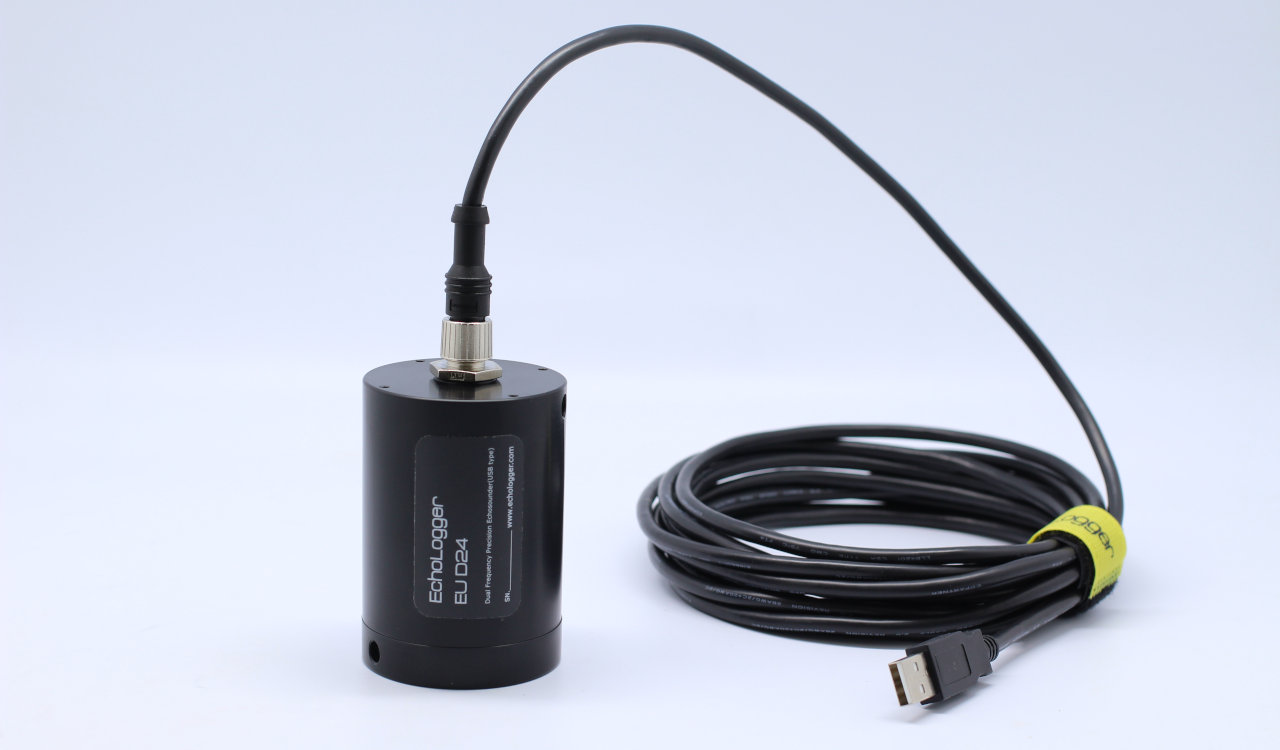


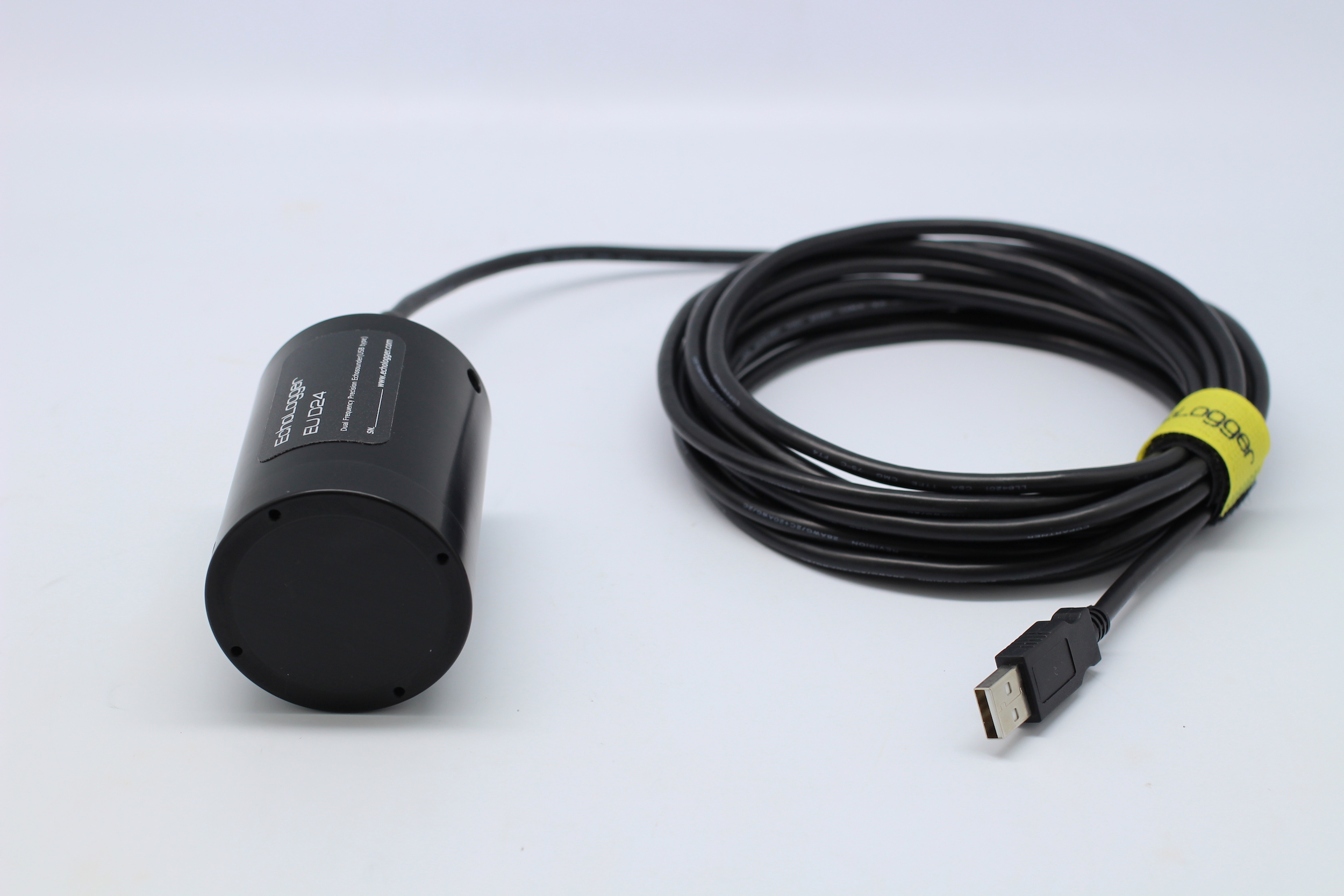
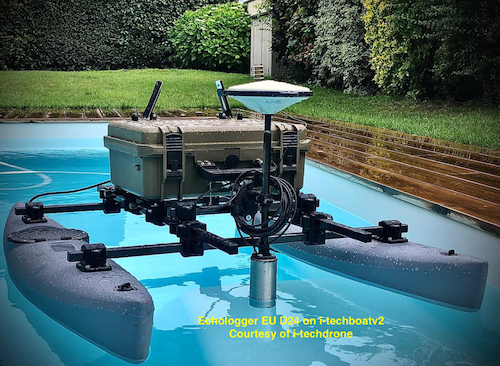
Echologger proudly presents the EU D24, a groundbreaking USB-interfaced professional echosounder, distinguished as the sole device in the market supporting dual frequencies (200kHz/450kHz). This cutting-edge feature empowers professionals in underwater surveys, offering the flexibility to select between two distinct frequencies, making the EU D24 an invaluable tool for applications like professional bathymetric surveys and scour monitoring.
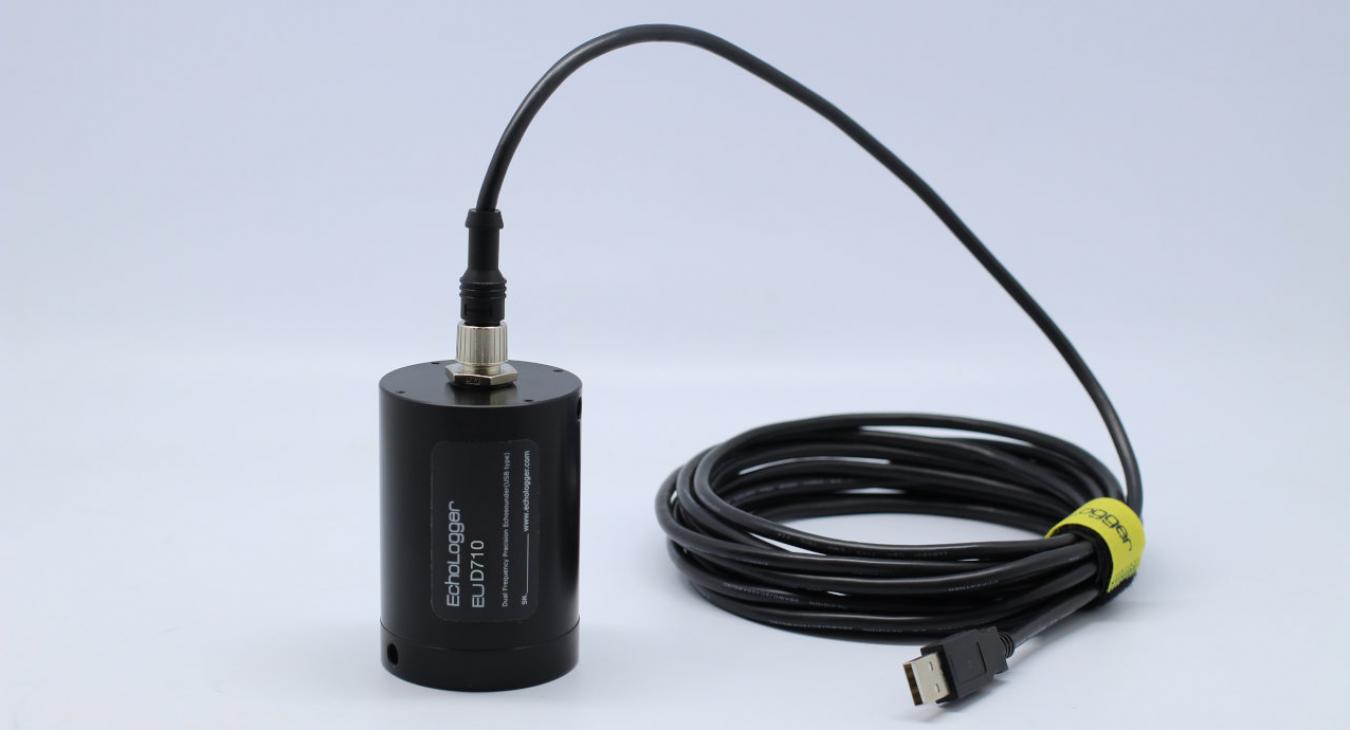
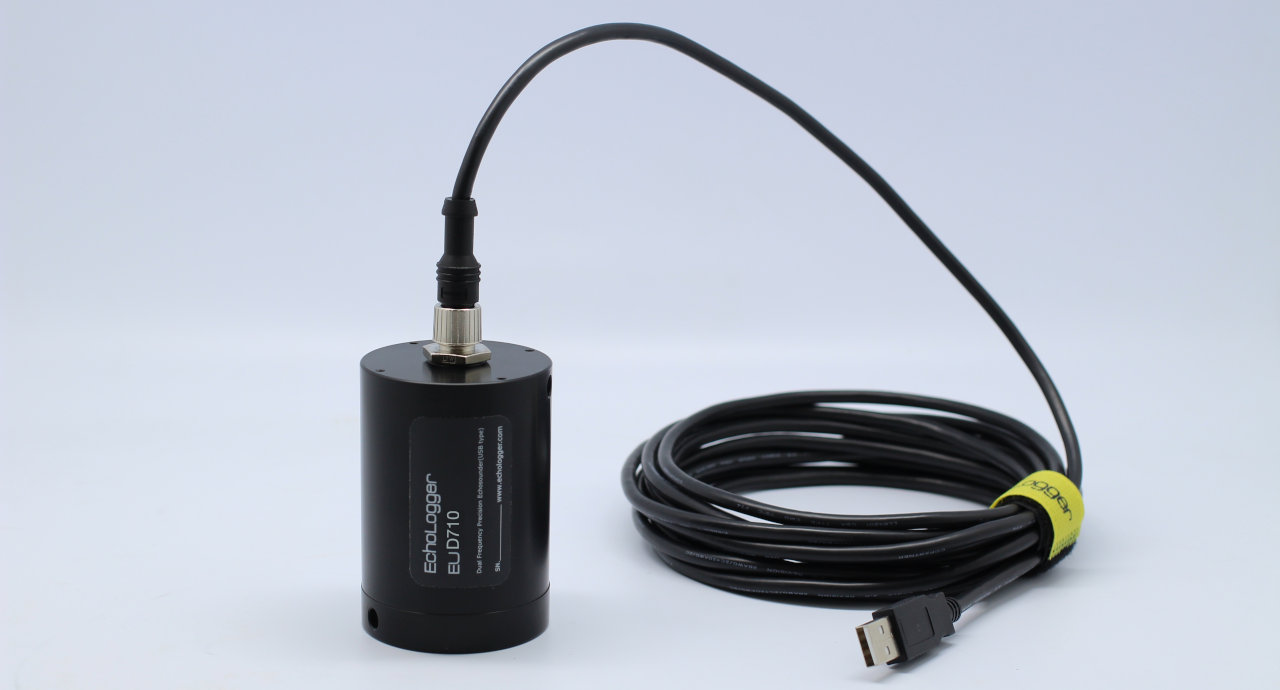
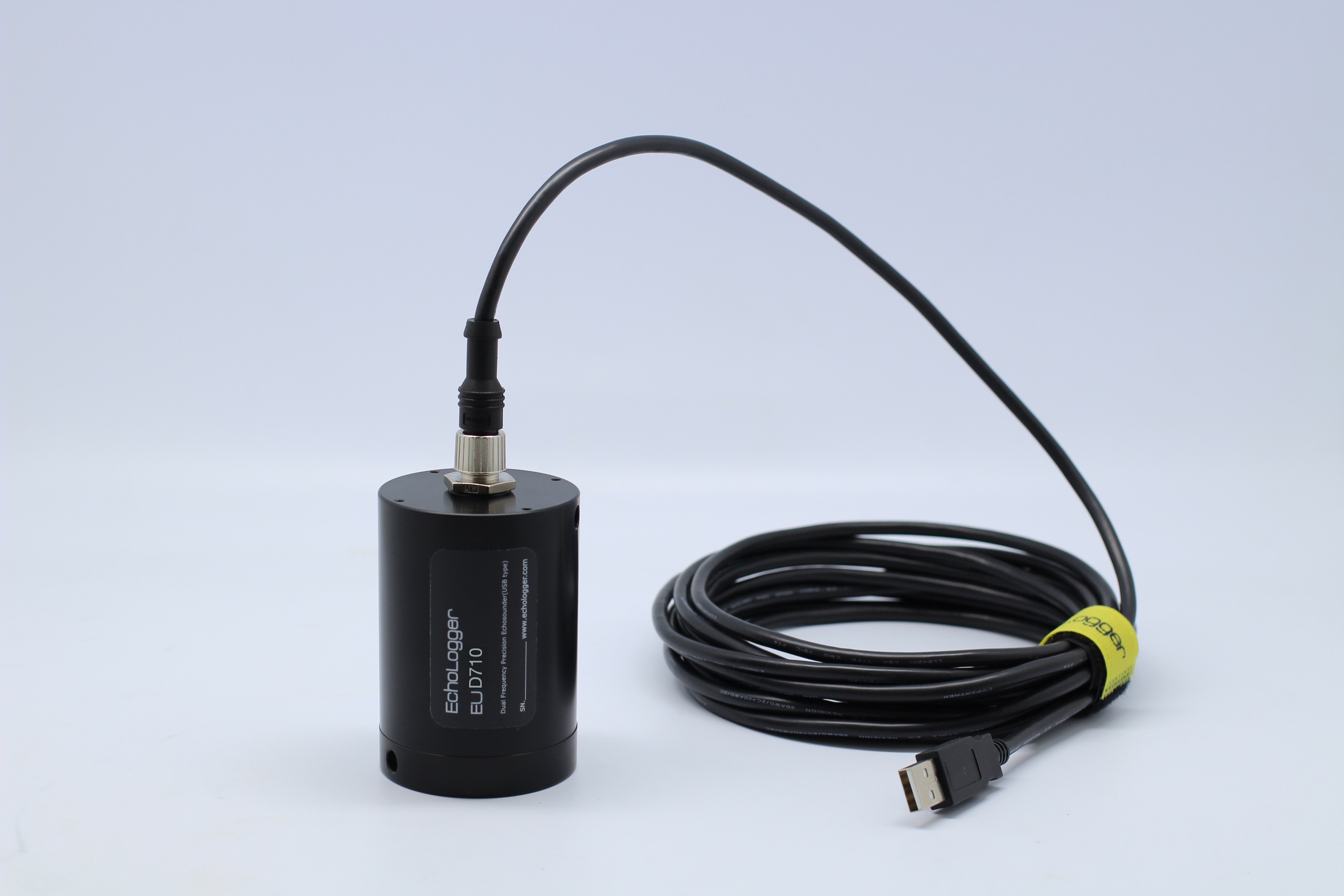
For scenarios involving extremely shallow waters, the EU D710 takes center stage with its exceptional support for high frequencies (750kHz/1MHz). This model is meticulously designed to excel in shallow environments, providing precise data collection in conditions where accuracy is paramount. The EU D710 finds its application in various operations, including sediment move studies, making it a reliable choice for professionals working in both manned and unmanned operations.
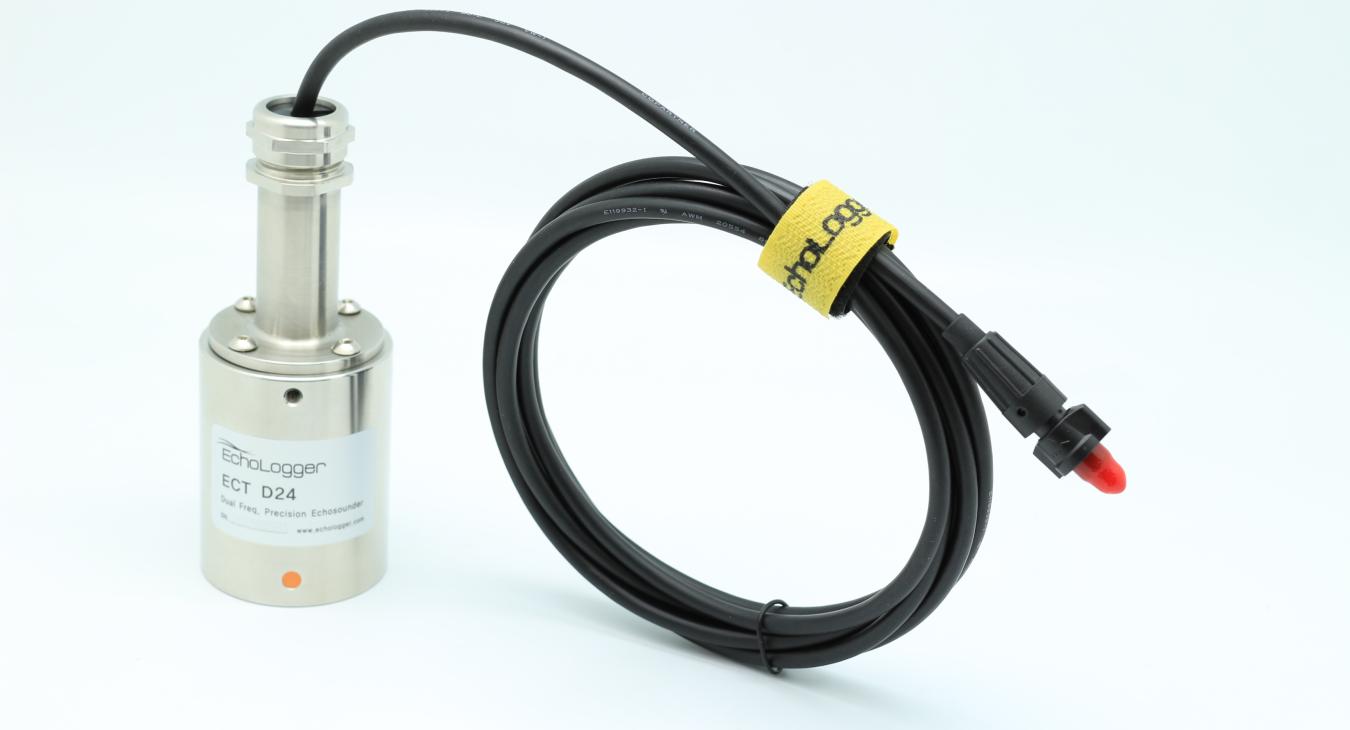
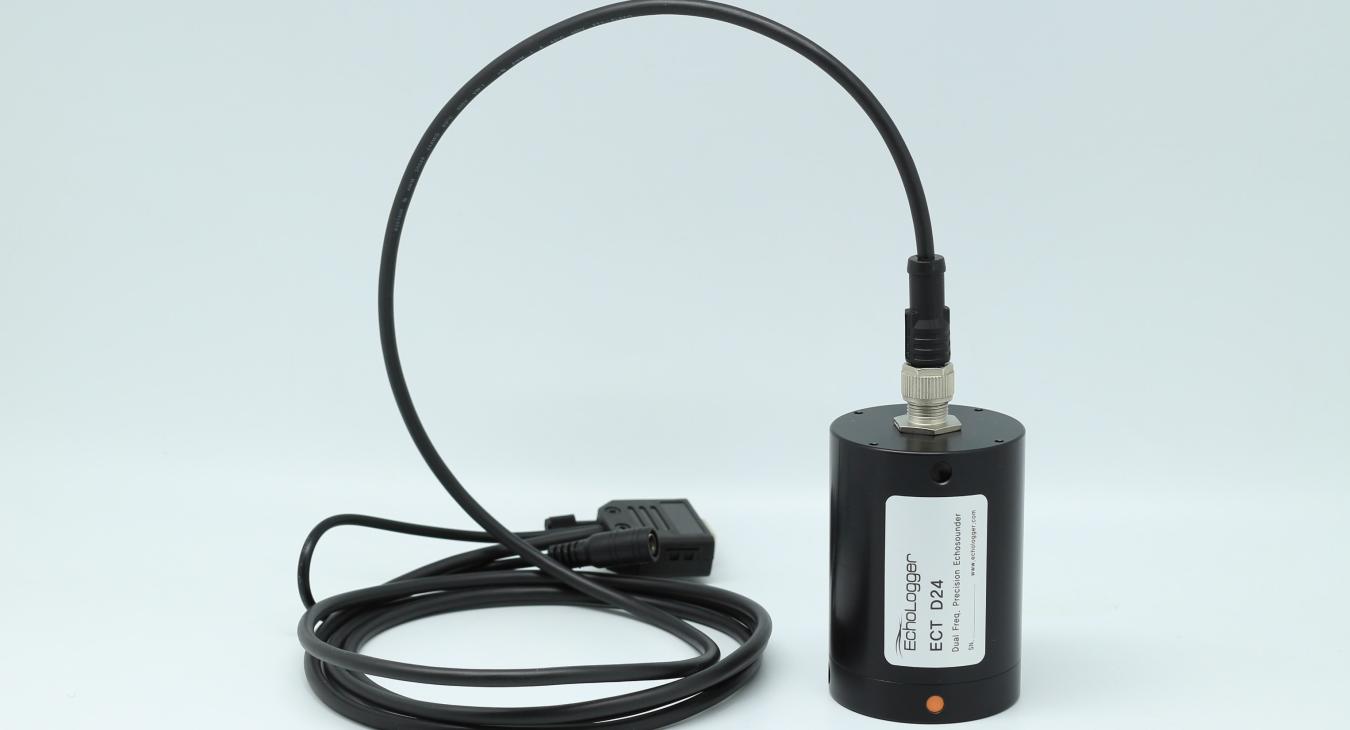
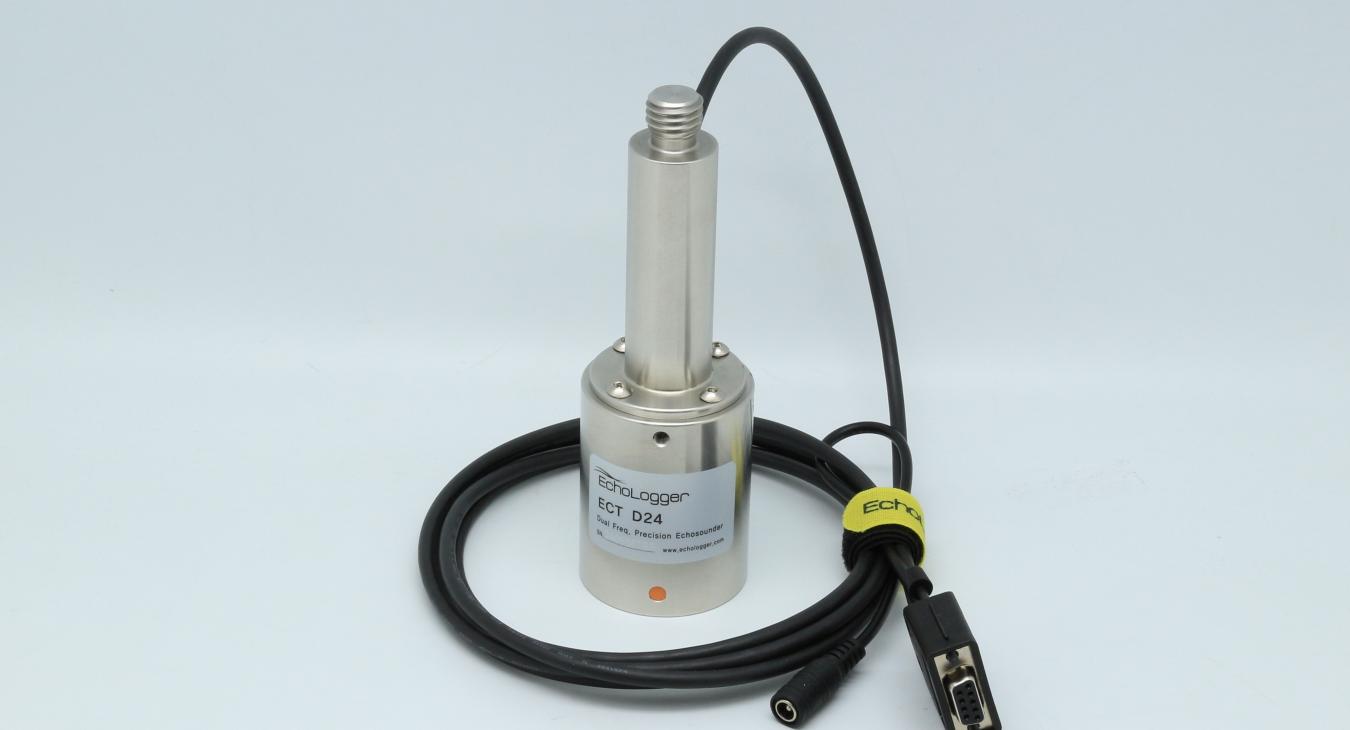
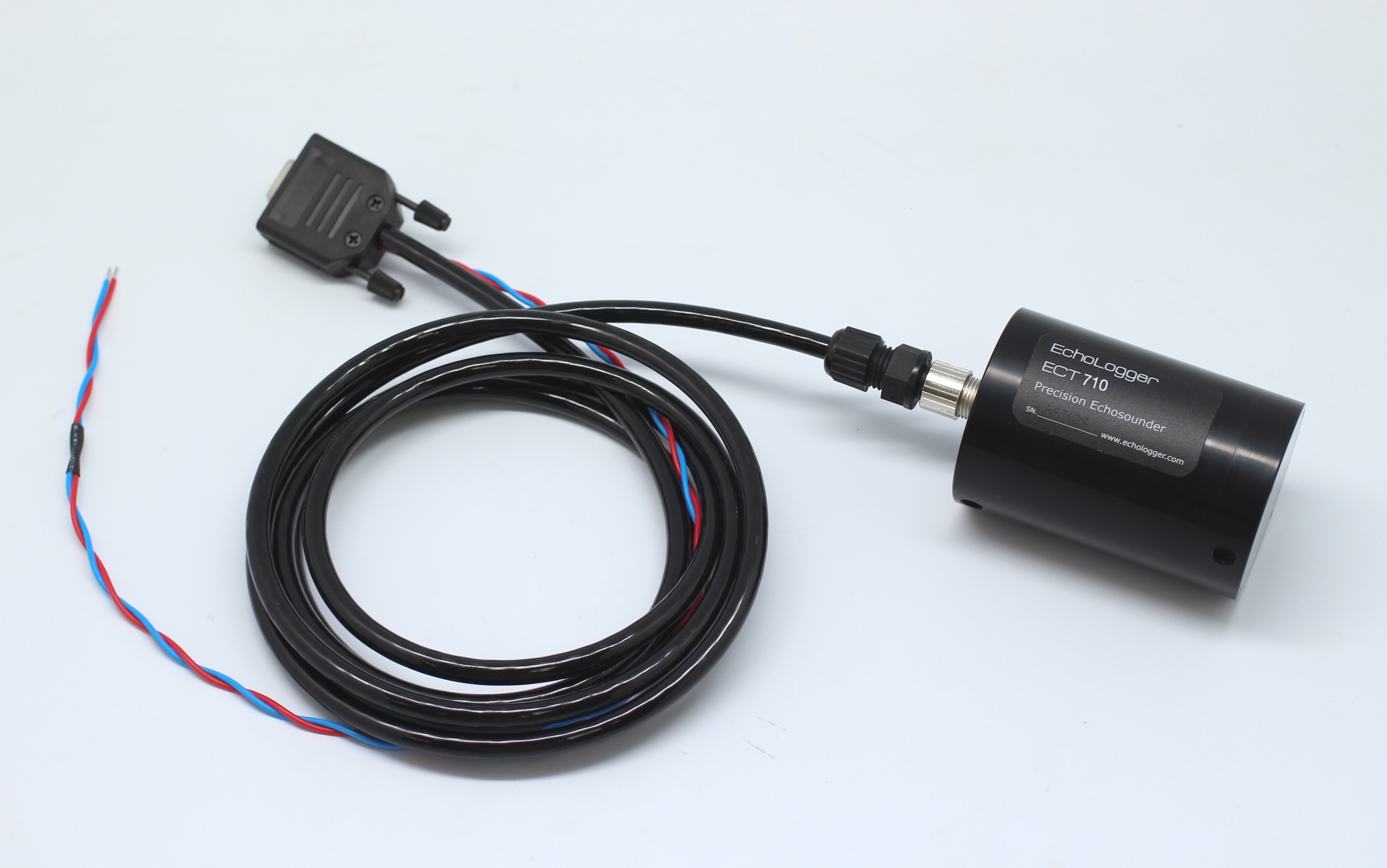
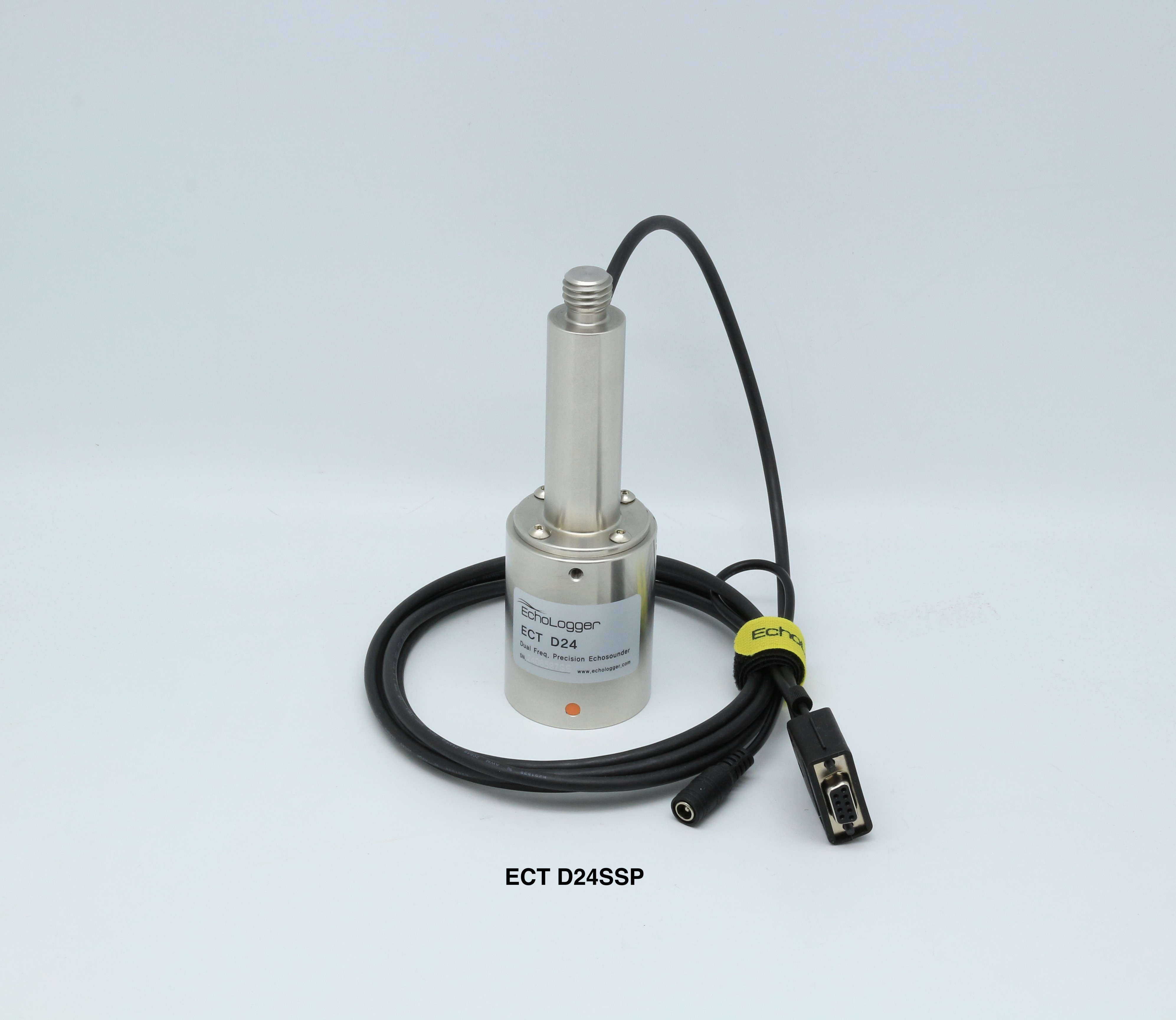
Complementing these advancements, the sister models ECT D24, ECS D24, ECT D710, and ECS D710 further contribute to Echologger's diverse echosounder portfolio. These models, featuring the universal serial interface schemes RS232 and 485, enhance compatibility with various systems. This broadens their utility across different applications, from manned operations like bathymetric surveys to unmanned operations on vehicles such as drones or remotely operated vehicles (ROVs).
Features
EU D24 & EU D710
- Plug and Play with a laptop PC via USB port
- No additional power supply is required
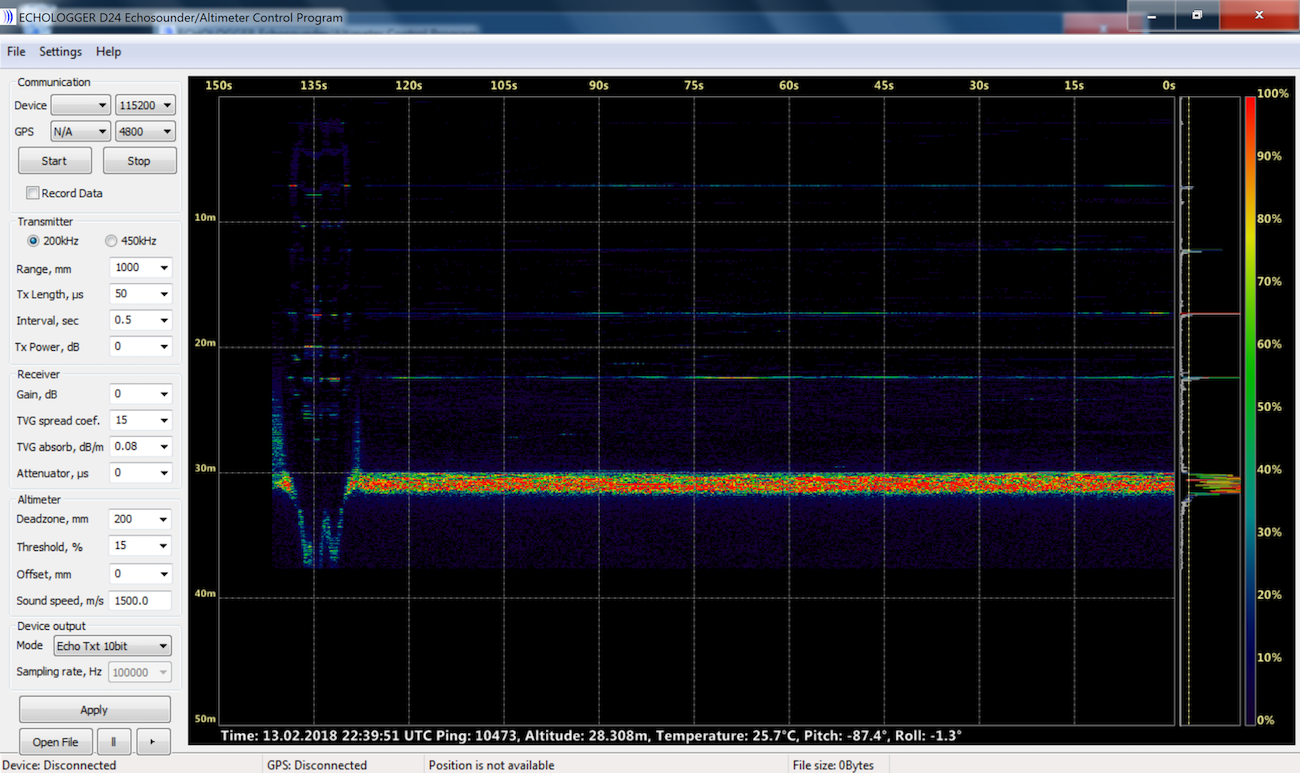
- Real-time backscatter data collection along full water columns
- Compatible with Hypack, HydroMagic and ReefMaster
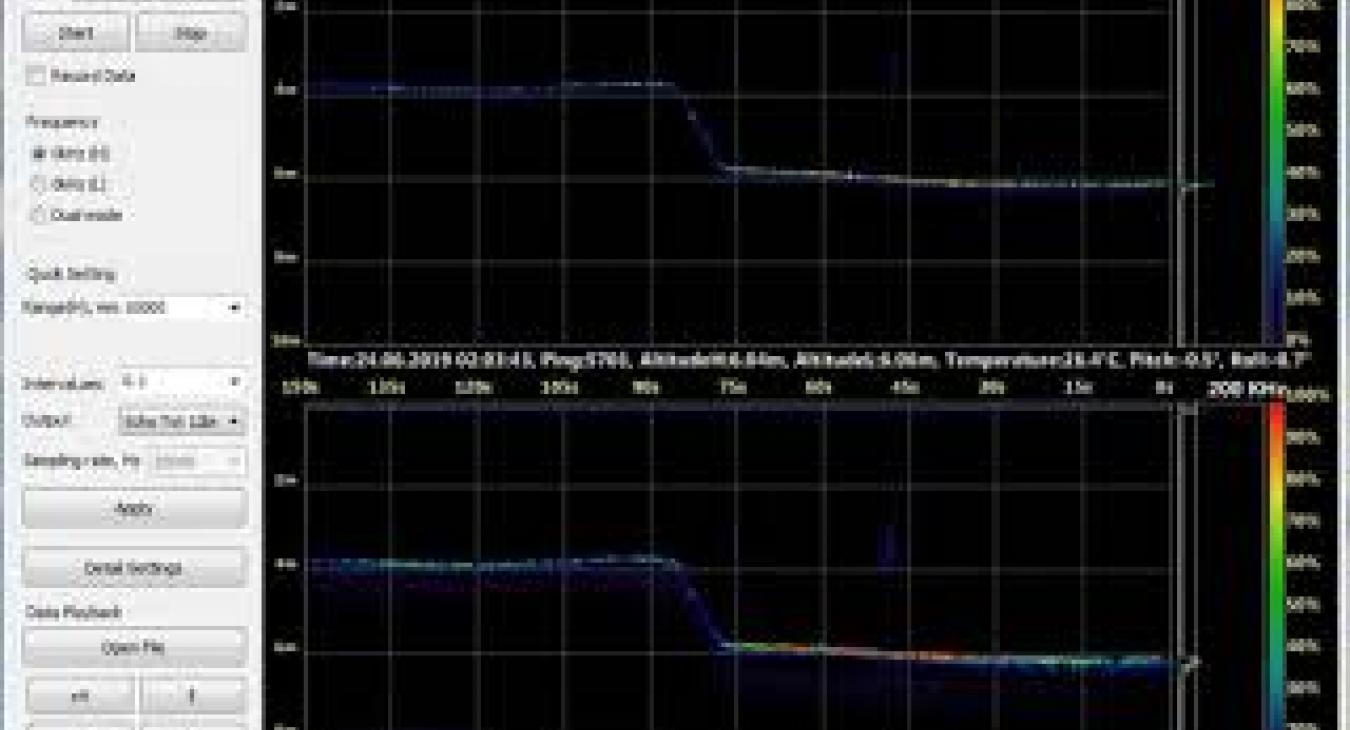
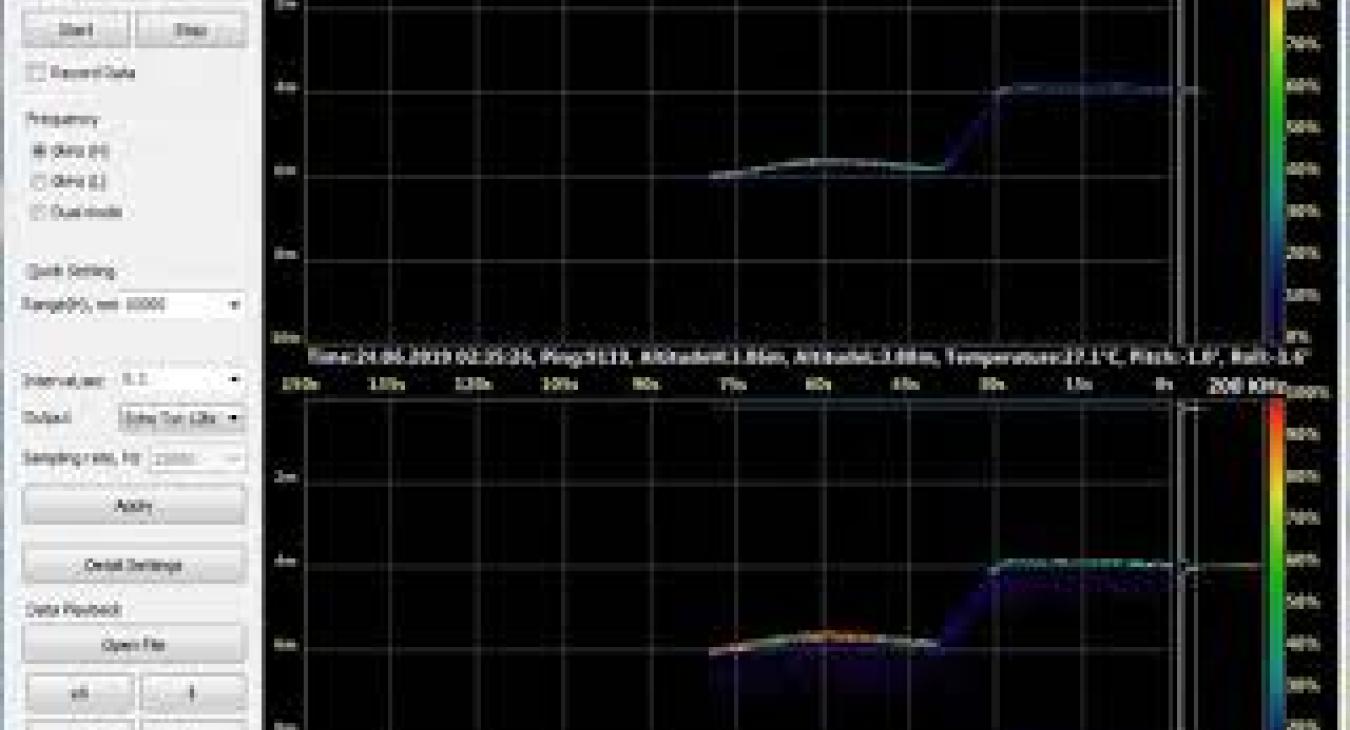
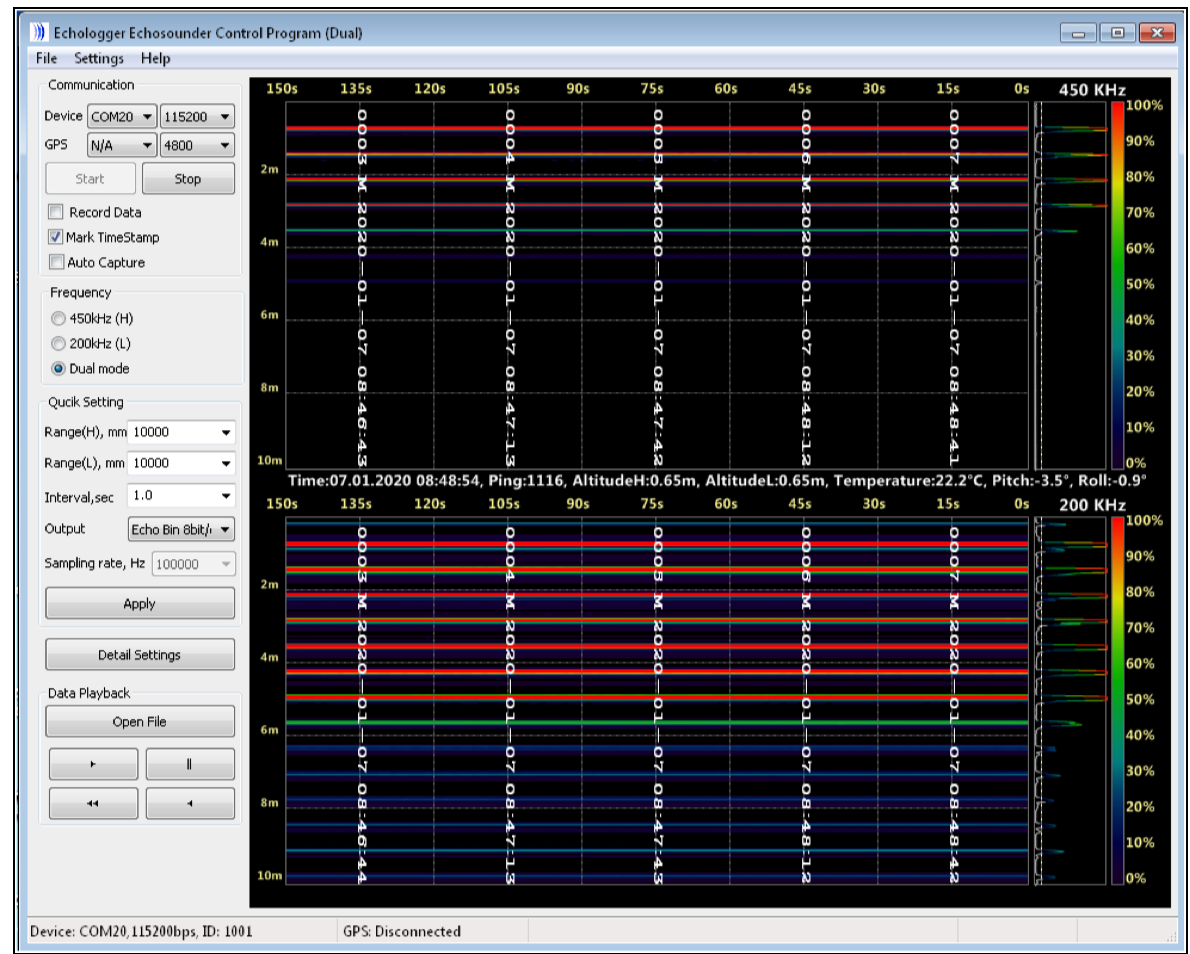
- User friendly GUI software provided for instant image update
- Tilt sensor integrated as standard
- Buad rate up to 3Mbaud for ping rate up to 100 Hz
ECT D24S & ECT D710S
- Real-time backscatter data collection along full water columns
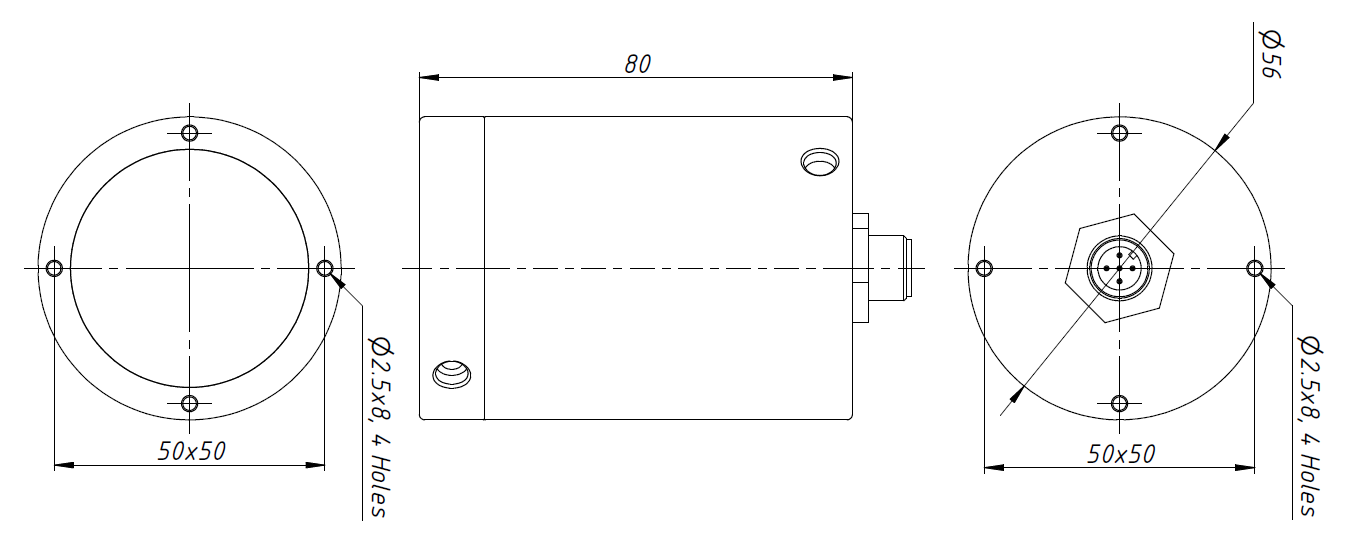
- Ultra compact (56mm dia. x 80mm length)
- Ideal for autopilot bathymetric surveys
- Serial interface (RS232, 485)

| Acoustic Frequency | 200 kHz / 450 KHz (EU D24 & ECT D24S), 750 kHz / 1MHz (EU D710 & ECT D710S) |
| Beam width | 10° / 5° (EU D24 & ECT D24S), 3.5° / 2.5° (EU D710 & ECT D710S) ,Conical (-3dB) |
| Transmit Pulse Width | 10µsec ~ 200µsec |
| Transmit Power | Max. 50 W (adjustable) |
| TVG Control | Up to 60 dB |
| Gain Control | -30 dB to +30 dB |
| Input Signal Attenuator (-20dB) | Activation time 0~300,000 µSec |
| Ranges | 0.5 ~ 200 m (200kHz) , 0.15 ~ 100 m (450kHz), 0.03 ~ 50 m (750kHz), 0.02 ~ 30 m (1MHz) |
| Repetition (Ping) Rate | 100 Hz max |
| Sampling Rate (Profiling mode) | Max 100kHz; adjustable, or auto mode (default) |
| Water Column Resolution | Appx. 7.5 mm @100kHz sampling |
| Altimeter Range Resolution | 1.0 mm |
| Temperature sensor Resolution | 0.1°C |
| Tilt sensor integrated | Dual-axis (Roll & Pitch) ±90° , Inclination data resolution 0.1° |
| Synchronization | Outward / Inward (S/W selectable) |
| Analog Output Interface | 1.25V, 2.5V, 5V, 10V max (S/W selectable) , Distance or Envelope |
| Digital Output Interface | RS-232, RS-485 (selectable by select pin) |
| Communication Speed | 4,800 ~ 921,600, 3M baud (115,200 default) |
| Data Output Format | Profile 10bit/12bit resolution ASCII Text , Profile 12bit resolution Binary , Profile 8bit resolution Binary (12bit compressed to 8bit) , Altitude NMEA0183 / Altitude Simple |
| Multi node Inter-networking(RS485 only) | Up to 32 units |
| Configuration and Data reading | Echologger Control Program or any Terminal program |
| Connector | LTW 12-05PMMS-SH8003 (IP68) |
| Power supply | EU D24, EU D710 :USB Powered, 2W max / ECT D24S, ECT D710S : 10 ~ 75 VDC, 2W max, Internally isolated |
| Operation Temperature | -10°C +50°C |
| Operating Depth | 1m (for surface vehicles) |
| Housing | Acetal |
| Dimensions | D56 mm x L80 mm, |
| Weight (100m rate) | 280g (exc. cable) |

What dual-frequency options are available in the shallow range?
This category includes two main dual-frequency configurations:
- 200 / 450 kHz (ECT D24S / EU D24) → balanced shallow-water survey performance
- 750 kHz / 1 MHz (ECT D710S / EU D710) → ultra-high-resolution measurement for very shallow / short-range applications
What is the advantage of dual frequency?
Dual frequency provides two independent acoustic responses from the same location, allowing users to combine different beam characteristics and measurement ranges in one system.
Depending on model:
- 200 / 450 kHz → combines coverage and resolution
- 750 kHz / 1 MHz → combines extremely short minimum range with very sharp beam angles
What is the difference between D24 and D710 series?
ECT D24S / EU D24 (200 / 450 kHz)
Best for:
- general hydrographic surveys
- shallow bathymetry
- applications requiring both coverage and detail
ECT D710S / EU D710 (750 kHz / 1 MHz)
Best for:
- very shallow water measurement
- very short distance / close-range applications
- high-precision profiling
Key characteristics:
- 1 MHz minimum range from ~2 cm
- 750 kHz minimum range from ~3 cm
- very narrow / sharp beam angle
- highest spatial resolution in the range
Does the system include a tilt sensor?
Yes. All shallow dual-frequency models in this category include a built-in tilt sensor as standard.
This provides:
- real-time orientation data
- improved measurement reliability on moving / tilted platforms
What data does the system provide?
The system records full raw echo data for both frequencies, enabling:
- depth measurement
- echogram (backscatter) for each frequency
Supported output formats include:
- Echo TXT (ASCII, full-resolution samples)
- Echo Binary (10-bit full resolution)
- Echo Binary (8-bit compressed)
- NMEA 0183
- PSA-916
- Sonarmite DFX / Sonarmite
Does the system support analogue output?
Yes. Supported models provide an analogue output interface for integration with external equipment and legacy systems.
Available output ranges are software-selectable:
- 1.25 V max
- 2.5 V max
- 5 V max
- 10 V max
The analogue output can be configured for:
- Distance output
- Echo envelope output
This enables compatibility with a wide range of third-party monitoring, logging, and control systems.
Is the system compatible with hydrographic survey software?
Yes. The system outputs standard formats such as NMEA, ASCII, and Binary, enabling integration with a wide range of hydrographic survey software.
Via NMEA output, the system is compatible with:
- BeamWorX
- HydroMagic
- HYPACK
- QPS Qinsy
- EIVA NaviSuite
- Trimble HydroPro / Trimble Access
- Chesapeake SonarWiz
For echogram (backscatter) data, BeamWorX, HydroMagic, and HYPACK can utilise ASCII/Binary outputs.
How is the system integrated and powered?
- EU models (EU D24 / EU D710) → USB connection (power + data, plug-and-play) → suitable for direct connection to laptops, tablets, and embedded computers such as Raspberry Pi
- ECT models (ECT D24S / ECT D710S) → RS232 / RS485 / RS422 with external DC power
This supports portable, embedded, and fully integrated survey systems.
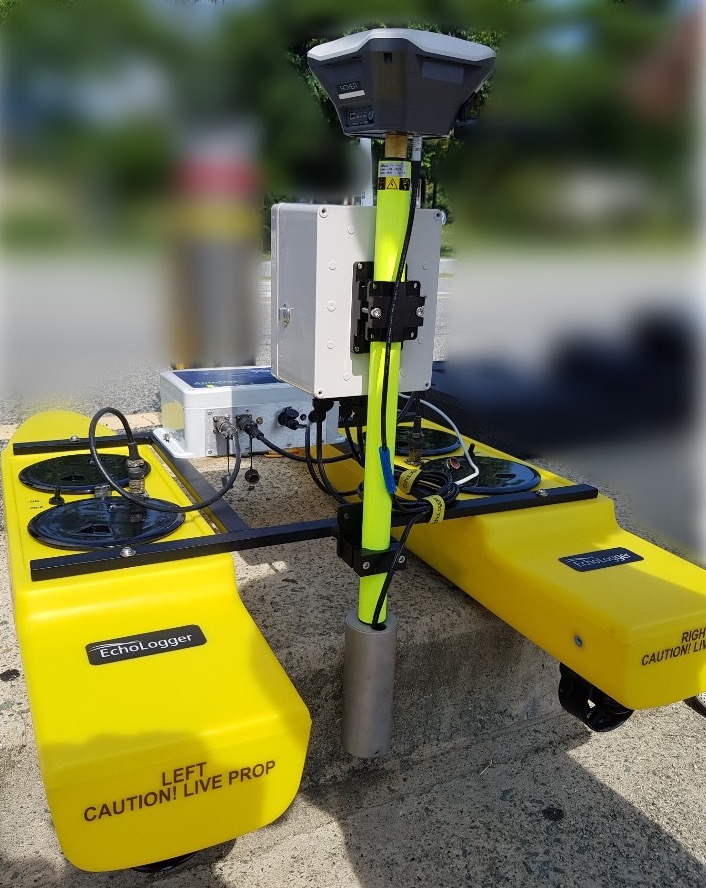
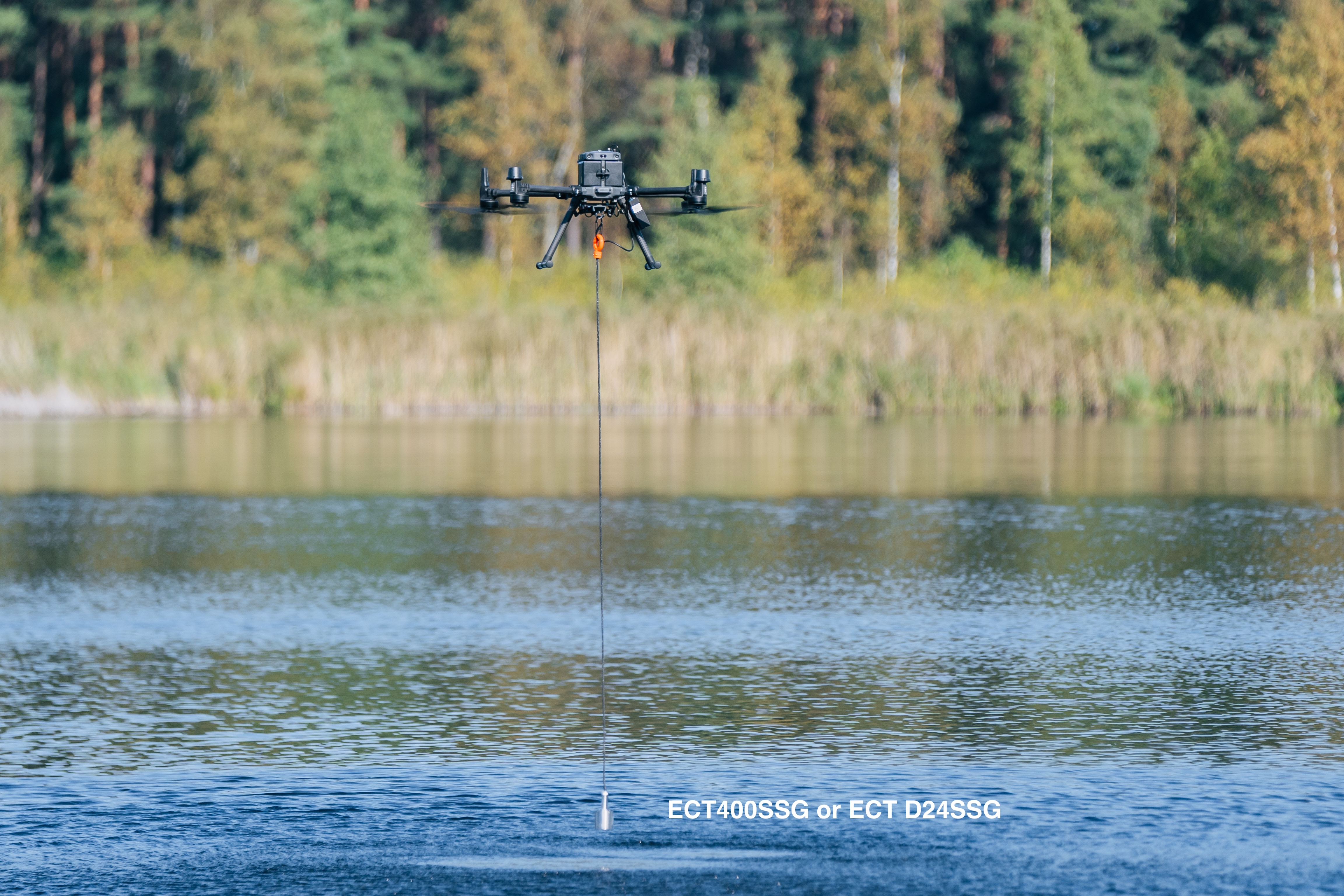
Are pole-mount and drone-tow versions available?
Yes.
- Pole-mounted deployment
- Drone towing / UAV bathymetry applications
These versions are optimised for specialised survey workflows and rapid deployment.
How compact is the system?
All models maintain an ultra-compact form factor (~56 mm diameter).
This allows:
- easy integration into USVs and drones
- portable deployment
- minimal payload and drag impact
When should I choose each model?
Choose ECT D24S / EU D24 when:
- you need balanced shallow-water survey capability
- both range and higher resolution are important
Choose ECT D710S / EU D710 when:
- measuring very shallow water
- extremely short minimum range is required
- maximum spatial resolution is needed
- Log in to post comments